Source bumper body kits for Tesla Model 3, BMW 3 Series, and Repair Projects
Explore 30 listings for bumper body kits compatible with vehicles like Tesla Model 3 and BMW 3 Series. Buyers can compare steel and plastic options, customization availability, and delivery times from suppliers in China.
Key considerations
Products List


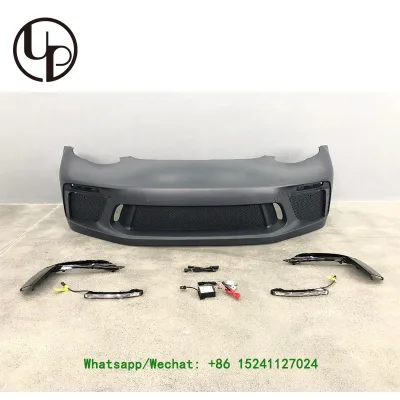

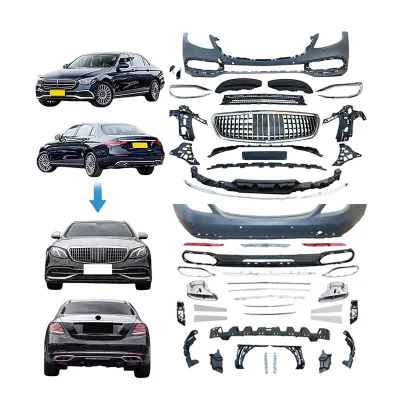
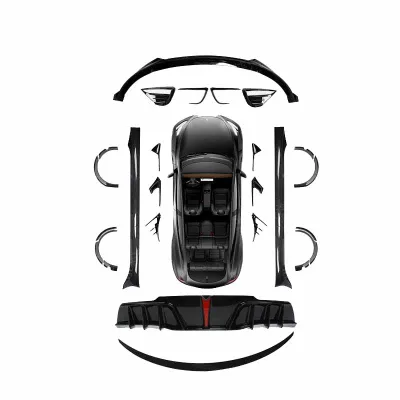


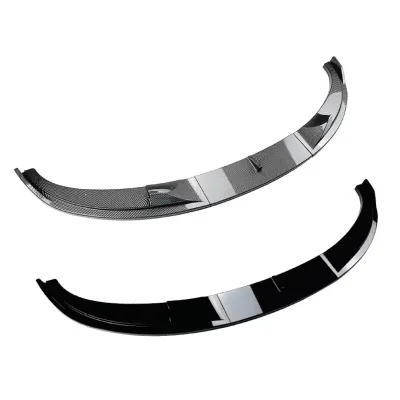




Comprehensive Sourcing Guide
Strategic Sourcing Guide for Bumper Body Kits
Understanding Technical Specifications and Material Variability
When sourcing bumper body kits, the first critical step is defining the precise technical specifications required for the target vehicle application. The market for these components is characterized by significant variability in materials, dimensions, and compatibility. Buyers must recognize that a single keyword search often yields products with divergent technical attributes. For instance, observed product data indicates that bumper kits are manufactured from distinct materials, including steel, plastic, and polypropylene (PP). Steel variants are often associated with heavy-duty applications or specific model numbers such as LC300, while plastic and PP options are frequently cited for lighter automotive applications, such as those designated for Model 3 vehicles.
Dimensional consistency is another paramount specification. Sourcing guides must account for the fact that physical dimensions vary widely based on the intended fitment. Data points show sizes ranging from compact units measuring 1464566cm to larger assemblies specified as 30013070mm. These measurements are not universal; they are specific to the vehicle model and the design of the bumper itself. A buyer sourcing a kit for a 2017-2019 vehicle model must verify that the listed dimensions align with the vehicle's chassis geometry. Furthermore, the orientation of the component is a vital specification. Products are often designated as "L" (Left) or "R" (Right), or described as a "Full set," which dictates the number of units required for a complete replacement. Ignoring these orientation details can lead to procurement errors where components do not align with the vehicle's mounting points.
The finish and color specifications also play a crucial role in the sourcing process. Some products are listed as "Black Powder Coated," offering a durable, ready-to-install aesthetic for specific steel components. Conversely, other listings specify "Primer" or "Color" options that require subsequent painting to match the vehicle's factory finish. The distinction between a pre-finished part and a primer-coated part significantly impacts the post-procurement workflow, labor costs, and lead time for the final assembly. Buyers must explicitly state their preference for finish type to ensure the supplier provides the correct variant.
Compliance, Certification, and Quality Standards
In the global automotive aftermarket, compliance and certification are non-negotiable aspects of a professional procurement strategy. While specific test results and performance claims vary by supplier, the presence of recognized certifications serves as a baseline indicator of manufacturing quality and adherence to international standards. Observed product listings frequently cite certifications such as ISO and CE. These designations suggest that the manufacturing facility operates under a quality management system (ISO) and that the product meets specific safety and environmental requirements for the European market (CE).
However, buyers must exercise caution and verify the scope of these certifications. The presence of an ISO or CE mark on a product listing does not automatically guarantee that every batch of the product meets the same rigorous standards. It is essential to request current certification documents from the supplier to confirm that the specific model number, such as X03-28030046 or X01-28040011, is covered under the valid certification period. Furthermore, the standard of the product itself, often referenced as "steel" or specific dimensional standards like 30013070mm, must be cross-referenced with the vehicle manufacturer's original equipment (OE) specifications.
Quality assurance is another pillar of compliance. Many suppliers assert a "100% Guaranteed" quality or "High-Quality" status. While these are positive indicators, they are qualitative claims that require verification through sample testing. Buyers should look for evidence of rigorous quality control processes, such as the use of anti-collision foam paper and wooden support frames during packaging, which indicates a commitment to preventing damage during transit. The packaging details, such as "Carton Box + Wooden Support" or "Carbon Box + Wooden Support," are not merely logistical choices but are often indicative of the supplier's attention to product integrity. A supplier that invests in robust packaging is more likely to maintain the structural integrity of the bumper during the shipping process, reducing the risk of receiving damaged goods.
Cost Drivers and Pricing Structures
The pricing of bumper body kits is influenced by a complex matrix of factors, including material costs, manufacturing complexity, customization requirements, and logistics. The observed price range in the market spans from $1 to $1,099 USD, reflecting the vast difference between simple plastic components and comprehensive steel body kits. This wide variance underscores the importance of understanding the cost drivers specific to the buyer's needs.
Material selection is a primary cost driver. Steel bumpers, often used for heavy-duty applications or specific model numbers like the LC300, generally command higher prices due to the raw material cost and the energy-intensive manufacturing processes involved, such as powder coating. In contrast, plastic and polypropylene (PP) bumpers, commonly used for passenger vehicles like the Model 3, may be priced lower due to the efficiency of injection molding and the lower cost of raw polymers. However, the price difference is not solely determined by material; the complexity of the design, such as the inclusion of integrated sensors or specific mounting points, also affects the final cost.
Customization is another significant factor influencing price. Many suppliers offer customization services, allowing buyers to request specific colors, finishes, or packaging requirements. The "Customer Request Packaging" option, for example, can add to the cost if it involves specialized materials like wooden frames or custom branding. Additionally, the Minimum Order Quantity (MOQ) plays a role in the unit price. While some listings show an MOQ of 1 set, others require a minimum of 10 pieces or 150 units. Buyers purchasing in smaller quantities may face higher per-unit costs, whereas bulk orders often benefit from economies of scale.
Payment terms and logistics also contribute to the total cost of ownership. Suppliers may offer various payment methods, including Western Union, Alipay, and Telegraphic Transfer (TT). The choice of payment method can affect the transaction fees and the speed of the transaction. Furthermore, the port of dispatch, such as Dalian or Guangzhou, and the delivery time, which can range from 1 to 15 days, impact the overall cost. Faster delivery times often come with a premium, while standard shipping may be more cost-effective but require longer lead times.
Typical Applications and Fitment Requirements
Bumper body kits are designed for specific applications, and understanding the intended use is crucial for successful procurement. The primary application for these components is the replacement or repair of damaged vehicle parts. Whether for a commercial vehicle or a passenger car, the bumper must provide protection and maintain the aesthetic integrity of the vehicle. The "Car Make" and "Model Number" are critical identifiers. For example, kits are specifically designed for vehicles like the Model 3, with fitment years ranging from 2017 to 2019. Similarly, other kits are tailored for models like the 3 5 Services, indicating a need for precise model matching.
Fitment is perhaps the most critical aspect of the application. A bumper that does not fit perfectly can compromise safety and aesthetics. Buyers should verify the "Fitment" rating, which is often described as "Excellent Fitment" in product listings. This rating suggests that the component is designed to align seamlessly with the vehicle's existing structure. However, buyers must also consider the "Position" of the bumper, whether it is a single side or a "Full set." A full set includes both left and right components, ensuring symmetry and complete coverage.
The purpose of the bumper also dictates its application. Some kits are designed for "Replace/Repair" scenarios, implying they are intended to restore a vehicle to its original condition. Others may be part of a larger body kit upgrade, requiring compatibility with other aftermarket parts. The "OEM" (Original Equipment Manufacturer) number is a vital reference for ensuring compatibility. Listings often provide specific OEM numbers, such as X03-28030046 or X01-28040011, which serve as a direct link to the original vehicle specifications. Buyers should cross-reference these numbers with their vehicle's service manual to ensure the correct part is selected.
Supplier Evaluation and Sourcing Strategy
Evaluating suppliers requires a systematic approach that goes beyond the initial product listing. Buyers should assess the supplier's location, as this can impact logistics and communication. Many suppliers are located in key manufacturing hubs in China, such as Zhejiang and Guangdong. These regions are known for their robust automotive parts industries, but the specific location can influence lead times and shipping costs. For instance, suppliers in Guangdong may have access to different ports, such as Guangzhou, compared to those in Zhejiang.
The supplier's production capacity and delivery time are also essential evaluation criteria. Some suppliers list a "Supply Ability" of 50 sets per month, which may be sufficient for small to medium-sized orders but insufficient for large-scale procurement. Buyers should verify if the supplier can scale production to meet their demand. Additionally, the "Delivery Time" is a critical factor. While some suppliers offer a lead time of 1-15 days, others may have longer processing times. Buyers must align their procurement timeline with the supplier's delivery capabilities to avoid project delays.
Quality assurance processes are another key area for supplier evaluation. Buyers should inquire about the supplier's quality control measures, such as the use of anti-collision foam and wooden supports during packaging. These measures indicate a commitment to product integrity and can reduce the risk of receiving damaged goods. Furthermore, the supplier's willingness to provide samples or conduct pre-shipment inspections can provide valuable insights into their reliability and quality standards.
Quality Control and Long-Term Procurement Considerations
Implementing a robust quality control (QC) strategy is essential for mitigating risks in bumper body kit procurement. Buyers should establish clear QC criteria based on the product specifications, including material composition, dimensional accuracy, and finish quality. Regular inspections, either in-house or through third-party agencies, can help ensure that the delivered products meet the required standards. The "100% Guaranteed" quality claims made by suppliers should be backed by tangible evidence, such as inspection reports or certification documents.
Long-term procurement considerations involve building a sustainable relationship with suppliers. This includes negotiating favorable payment terms, such as Western Union, Alipay, or TT, and establishing clear communication channels. Buyers should also consider the supplier's ability to provide consistent quality over time. A supplier that can maintain high standards across multiple batches is more likely to be a reliable long-term partner. Additionally, buyers should monitor market trends and technological advancements in bumper manufacturing to ensure they are sourcing the most advanced and cost-effective solutions.
Finally, buyers should consider the environmental impact of their procurement decisions. Many suppliers are increasingly adopting sustainable practices, such as using eco-friendly packaging materials or optimizing production processes to reduce waste. Aligning with suppliers who prioritize sustainability can enhance the buyer's brand reputation and contribute to a more responsible supply chain. By focusing on these long-term considerations, buyers can build a resilient and efficient procurement strategy that supports their business goals.
Comparative Analysis of Product Attributes
To facilitate informed decision-making, buyers can utilize a comparative analysis of key product attributes. The following table summarizes the observed variations in material, dimensions, and specifications across different product listings.
| Attribute | Variant A | Variant B | Variant C |
|---|---|---|---|
| Material | Steel | Plastic | PP (Polypropylene) |
| Model Number | LC300 | X03-28030046 | X01-28040011 |
| Dimensions | 1464566cm | 30013070mm | Standard OE |
| Color/Finish | Black Powder Coated | Primer | Black |
| Car Make | 3 5 Services | Model 3 | Model 3 |
| MOQ | 10 PCS | 1 Set | 1 Set |
| Origin | Zhejiang, China | Guangdong, China | China |
| Certification | ISO, CE | ISO, CE | ISO, CE |
This table highlights the diversity in product offerings and underscores the need for buyers to carefully match specifications to their specific requirements. By comparing these attributes, buyers can make more informed decisions and select the most suitable bumper body kits for their needs.
FAQs
What materials are used for bumper body kits?
Bumper body kits are manufactured from steel, plastic, or polypropylene depending on the vehicle model. Steel variants are common for heavy-duty applications like the LC300, while plastic and PP options are frequently used for passenger vehicles such as the Model 3.
Which certifications do these bumpers typically hold?
Many listed products carry ISO and CE certifications to indicate adherence to quality management and safety standards. Buyers should verify that these certifications cover the specific model numbers and batch requirements before finalizing procurement.
How long is the delivery time for these parts?
Delivery times generally range from 1 to 15 days depending on the supplier and order specifics. Some listings specify a lead time of 3 to 15 days, while others offer faster dispatch options based on stock availability.
Can I request custom packaging for my order?
Yes, customization is available, including specific packaging requests like carton boxes with wooden support or anti-collision foam. Suppliers often use robust packaging methods to prevent product damage during transit to the destination port.
What is the minimum order quantity for these kits?
Minimum order quantities vary significantly, ranging from 1 set to 150 units depending on the supplier. Some listings require a minimum of 10 pieces, while others allow for single item purchases or small batch orders.
Where are these bumper kits manufactured?
Products originate from manufacturing hubs in China, specifically in provinces like Zhejiang and Guangdong. These locations influence the port of dispatch, which can be Dalian or Guangzhou, affecting shipping logistics and lead times.
Which vehicle models are compatible with these bumpers?
These kits are designed for specific applications including the Model 3 and vehicles designated as 3 5 Services. Buyers must verify the model number, such as L7 or X01-28040011, to ensure proper fitment and orientation.